
Arabic assault lawyer in Georgia
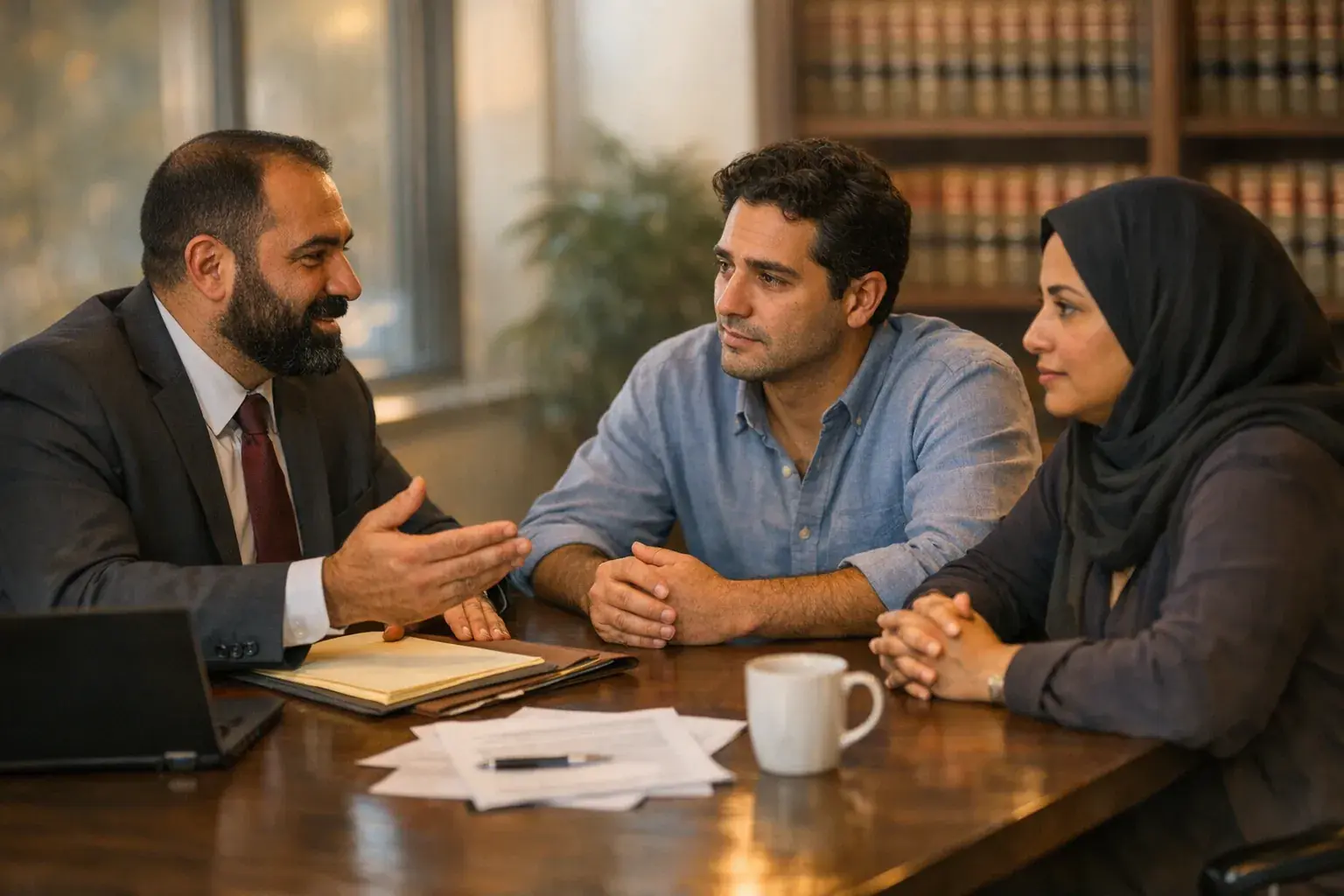
Looking for an Arabic assault & battery defense lawyer near you in Georgia? Connect with Arab assault & battery defense attorneys trusted by Iraqi, Syrian, Lebanese & Palestinian families. Free consultation across Georgia.


Arabic assault & battery defense lawyers by Georgia city
Find an Arab assault & battery defense attorney near you. Iraqi, Syrian, Lebanese, Palestinian & all Arab lawyers in every Georgia city.



Find an Arabic assault & battery defense lawyer in Georgia
Georgia is home to an estimated 40,000+ Arab Americans, with significant communities in Atlanta, Clarkston, Marietta, Decatur. Our network connects Iraqi, Egyptian, Syrian, Palestinian, and other Arab families with experienced Arabic-speaking assault & battery defense attorneys across the state. These lawyers combine fluent Arabic communication with deep knowledge of Georgia law, ensuring you can discuss your case in your preferred language without missing critical legal details.
Georgia sets the BAC limit at 0.08 for DUI charges, with first-offense penalties including up to 1 year jail, $300-$1,000 fine, 120-day license suspension, dui school, 40 hours community service. The state follows stand-your-ground law, meaning there is no duty to retreat before using force in self-defense. Georgia does offer expungement for eligible offenses — an important option for protecting future employment and immigration status. For non-citizen Arab Americans, assault & battery defense convictions can trigger deportation proceedings. An Arabic-speaking defense attorney in Georgia evaluates both criminal penalties and immigration consequences before advising on pleas or trial strategy.
Why choose an Arabic-speaking assault & battery defense attorney in Georgia
Native Arabic communication
Discuss your assault & battery defense case in Arabic without interpreters. Explain complex situations clearly and understand every detail of your legal options.
Cultural understanding
Work with attorneys who understand Arab family dynamics, cultural values, and how they relate to your assault & battery defense case.
Georgia assault & battery defense experience
Lawyers with deep experience handling assault & battery defense cases in Georgia courts under Georgia law.
Built for the community
Every attorney in our Georgia network is licensed and Arabic-speaking, with experience in assault & battery defense cases.
Get a free consultation with an Arabic assault & battery defense lawyer in Georgia
All consultations with Arabic assault & battery defense lawyers in our Georgia network are completely free and confidential. During your consultation, you'll discuss your assault & battery defense situation in Arabic with a qualified attorney who can explain your legal options clearly.
Phone or video
Speak with a lawyer from anywhere in Georgia
Quick response
Most consultations within 24 hours
No cost to you
Free initial consultation guaranteed
Arabic assault & battery defense lawyer services in Georgia
Defense for assault and battery charges including self-defense claims and cases involving racial profiling.
Self-defense claims
Build strong self-defense arguments with cultural context.
Profiling defense
Challenge cases where racial or ethnic profiling played a role.
Charge reduction
Negotiate felony assault down to misdemeanor or lesser charges.
Record protection
Minimize long-term impact on your criminal record and future.
How much does an Arabic assault & battery defense lawyer cost in Georgia?
Legal fees for assault & battery defense cases vary depending on the complexity and circumstances. Here's what to expect when hiring an Arabic-speaking assault & battery defense lawyer in Georgia:
Criminal defense fee ranges:
- Assault & Battery Defense: Varies by charge severity
- Flat fee or retainer-based
- Payment plans available
- Free initial consultation
What's included:
- Immigration consequence assessment
- Evidence review and defense strategy
- Court representation at all hearings
- Plea negotiation or trial defense
* Fees are estimates and vary by case complexity. Get an exact quote during your free consultation.
Arab assault & battery defense lawyer process in Georgia
Our streamlined process gets you the help you need quickly and efficiently.
Post-Arrest & Evidence Preservation
Contact an Arabic-speaking defense attorney immediately. Critical evidence — surveillance footage, witness availability, injury documentation — disappears quickly.
Investigation & Self-Defense Analysis
Conduct independent investigation. If self-defense applies, gather evidence showing who initiated contact, the threat level, and proportionality of response.
Pre-Trial Motions & Negotiation
File motions to suppress evidence or dismiss charges. Negotiate with prosecutors — present self-defense evidence, mitigating factors, and any profiling concerns.
Trial or Resolution
If the case cannot be dismissed or reduced, prepare a strong trial defense emphasizing self-defense, witness credibility issues, or prosecutorial burden of proof.
Arabic assault & battery defense lawyers in Georgia for all nationalities
Our Georgia network includes assault & battery defense attorneys experienced with clients from every Arabic-speaking country. Whether you're from the Levant, Gulf, North Africa, or elsewhere, we'll match you with a lawyer who understands your specific background.
Plus attorneys familiar with Kuwaiti, Libyan, Sudanese, Somali, Chaldean, Assyrian, and other Middle Eastern communities

Book your free consultation today
Take the first step—select your legal matter below and get matched with an experienced Arabic-speaking attorney within 24 hours. No fees, no obligation.
How to find the best Arabic assault & battery defense lawyer in Georgia
Finding the right Arabic-speaking assault & battery defense lawyer in Georgia doesn't have to be difficult. Here's what to look for when choosing your attorney:
Verify Arabic language skills
Ask if the attorney speaks Arabic fluently. Can they explain complex assault & battery defense concepts in Arabic?
Check assault & battery defense experience
Look for attorneys with proven experience handling assault & battery defense cases in Georgia.
Read reviews from Arab clients
Look for testimonials specifically from Arab American clients who had assault & battery defense cases.
Schedule a free consultation
Meet with the attorney before deciding. A free consultation lets you assess their expertise firsthand.
Georgia criminal defense laws
Every state has different criminal laws and penalties. Here's what you need to know about defending charges in Georgia.
DUI / DWI Laws
Up to 1 year jail, $300-$1,000 fine, 120-day license suspension, DUI school, 40 hours community service
48 hours to 1 year jail, $600-$1,000 fine, 18-month license suspension (hard suspension for 120 days), 30 days community service
Georgia has mandatory minimum jail time for repeat offenses. Refusing a breathalyzer triggers a 1-year administrative license suspension under implied consent law.
Drug Laws
Under 1 oz: misdemeanor (up to 1 year jail, $1,000 fine). Over 1 oz: felony (1-10 years prison).
Georgia has strict drug laws. Possession of more than 1 ounce of marijuana is a felony. First Offender Act may be available for first-time drug offenses.
Assault & Self-Defense
Misdemeanor — up to 1 year jail, $1,000 fine
Felony — 1-20 years prison (assault with a deadly weapon or with intent to murder, rape, or rob)
Georgia has a stand your ground law (O.C.G.A. § 16-3-23.1). No duty to retreat before using force, including deadly force, if you reasonably believe it is necessary to prevent death or great bodily injury. Castle Doctrine also applies.
Criminal Thresholds & Expungement
Georgia allows record restriction (sealing) for arrests without conviction, dismissed charges, and some first offender cases. True expungement is very limited.
Georgia's First Offender Act allows first-time felony defendants to avoid a conviction on their record if they complete their sentence, but the charge remains visible until restricted.
Immigration Consequences
Georgia has no sanctuary protections. Several counties, including Gwinnett and Hall, have active 287(g) agreements with ICE. The First Offender Act disposition may or may not be considered a "conviction" for immigration purposes — careful legal analysis is required.
For Arab and Muslim community members with immigration concerns, it is critical to have an attorney who understands both criminal defense strategy and immigration consequences. A conviction that seems minor can lead to deportation, denial of naturalization, or loss of visa status.
Key Facts About Criminal Law in Georgia
- 1Stand your ground state with Castle Doctrine
- 2Marijuana possession over 1 oz is a felony
- 3First Offender Act — may avoid conviction for first felony
- 4Implied consent — refusal triggers 1-year license suspension
- 510-year lookback for DUI prior offenses
- 6No sanctuary protections — several counties cooperate with ICE
This information is for educational purposes only and does not constitute legal advice. Laws may change. Consult with an attorney for advice specific to your situation.
Questions to ask an Arabic assault & battery defense lawyer in Georgia
When you meet with an Arabic-speaking assault & battery defense attorney for your free consultation, ask these important questions:
Directory
Criminal Defense lawyers in Georgia
Arabic-speaking attorneys serving the Arab community in Georgia.
No Arabic-speaking criminal defense attorneys listed in Georgia yet.
Know an attorney who should be listed?
Recommend or join our networkArabic assault & battery defense lawyer FAQs — Georgia
Common questions about Arab assault & battery defense attorneys in Georgia
Are you an Arabic-speaking criminal defense attorney in Georgia? Join our network
Get matched with an Arabic-speaking assault & battery defense attorney in Georgia today
Looking for an Arabic assault & battery defense lawyer near you? Connect with a Arabic-speaking Arab attorney in Georgia. Free consultation, 24-hour matching, no obligation.
Disclaimer: The information on this page is for general educational purposes only and does not constitute legal advice. Georgia laws may differ from other states. Each case is unique and outcomes depend on specific facts. Contact a qualified attorney for advice specific to your situation.