
Arabic divorce lawyer in North Carolina
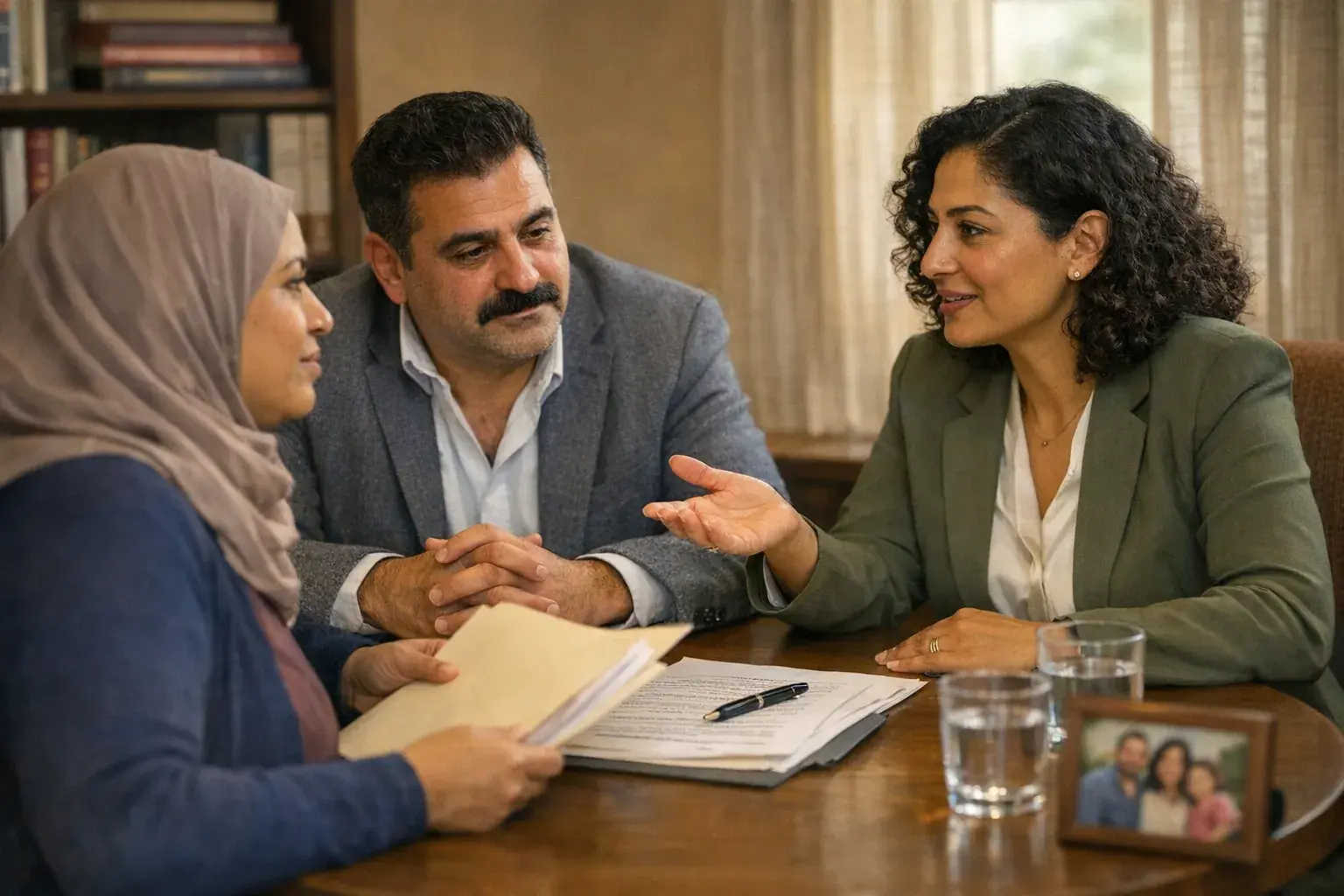
Looking for an Arabic divorce & separation lawyer near you in North Carolina? Connect with Arab divorce & separation attorneys trusted by Iraqi, Syrian, Lebanese & Palestinian families. Free consultation across North Carolina.


Arabic divorce & separation lawyers by North Carolina city
Find an Arab divorce & separation attorney near you. Iraqi, Syrian, Lebanese, Palestinian & all Arab lawyers in every North Carolina city.



Find an Arabic divorce & separation lawyer in North Carolina
North Carolina is home to an estimated 20,000+ Arab Americans, with significant communities in Charlotte, Raleigh, Durham, Greensboro. Our network connects Iraqi, Palestinian, Lebanese, Egyptian, and other Arab families with experienced Arabic-speaking divorce & separation attorneys across the state. These lawyers combine fluent Arabic communication with deep knowledge of North Carolina law, ensuring you can discuss your case in your preferred language without missing critical legal details.
North Carolina follows equitable distribution for marital property, meaning courts divide assets fairly but not necessarily equally — making skilled negotiation essential in divorce & separation cases. North Carolina courts have addressed mahr agreements — an Arabic-speaking family lawyer understands how to present these Islamic marriage contracts in ways North Carolina judges recognize.
Why choose an Arabic-speaking divorce & separation attorney in North Carolina
Native Arabic communication
Discuss your divorce & separation case in Arabic without interpreters. Explain complex situations clearly and understand every detail of your legal options.
Cultural understanding
Work with attorneys who understand Arab family dynamics, cultural values, and how they relate to your divorce & separation case.
North Carolina divorce & separation experience
Lawyers with deep experience handling divorce & separation cases in North Carolina courts under North Carolina law.
Built for the community
Every attorney in our North Carolina network is licensed and Arabic-speaking, with experience in divorce & separation cases.
Get a free consultation with an Arabic divorce & separation lawyer in North Carolina
All consultations with Arabic divorce & separation lawyers in our North Carolina network are completely free and confidential. During your consultation, you'll discuss your divorce & separation situation in Arabic with a qualified attorney who can explain your legal options clearly.
Phone or video
Speak with a lawyer from anywhere in North Carolina
Quick response
Most consultations within 24 hours
No cost to you
Free initial consultation guaranteed
Arabic divorce & separation lawyer services in North Carolina
Expert representation for Islamic divorce (talaq), mahr disputes, property division, and contested or uncontested divorce proceedings.
Islamic divorce expertise
Attorneys who understand talaq, khula, and mahr enforcement in US courts.
Property protection
Fair division of assets with cultural understanding of family finances.
Confidential process
Discuss sensitive matters privately in Arabic with full attorney-client privilege.
Children first
Prioritize custody and support arrangements that protect your children.
How much does an Arabic divorce & separation lawyer cost in North Carolina?
Legal fees for divorce & separation cases vary depending on the complexity and circumstances. Here's what to expect when hiring an Arabic-speaking divorce & separation lawyer in North Carolina:
Family law fee ranges:
- Divorce & Separation: Varies by complexity
- Flat fee or hourly billing
- Payment plans available
- Free initial consultation
What's included:
- Mahr and Islamic contract review
- Court filing and representation
- Custody and support negotiation
- Property division strategy
* Fees are estimates and vary by case complexity. Get an exact quote during your free consultation.
Arab divorce & separation lawyer process in North Carolina
Our streamlined process gets you the help you need quickly and efficiently.
Initial Consultation & Case Assessment
We review your situation including the marriage, assets, children, and any Islamic marriage contracts (mahr). We explain your options under state law and develop a strategy that respects both your legal rights and cultural values.
Filing the Petition
We file the divorce petition in the appropriate court, establishing grounds for divorce and requesting temporary orders if needed (custody, support, restraining orders). Your spouse is formally served with the papers.
Discovery & Negotiation
Both sides exchange financial information and negotiate terms. This includes property division, custody arrangements, child support, and alimony. We advocate for fair treatment of mahr and Islamic contract terms within the American legal framework.
Settlement or Trial
Most cases settle through negotiation or mediation. If agreement cannot be reached, the case goes to trial where a judge decides. We prepare thoroughly for both outcomes and present your case with cultural competence.
Arabic divorce & separation lawyers in North Carolina for all nationalities
Our North Carolina network includes divorce & separation attorneys experienced with clients from every Arabic-speaking country. Whether you're from the Levant, Gulf, North Africa, or elsewhere, we'll match you with a lawyer who understands your specific background.
Plus attorneys familiar with Kuwaiti, Libyan, Sudanese, Somali, Chaldean, Assyrian, and other Middle Eastern communities

Book your free consultation today
Take the first step—select your legal matter below and get matched with an experienced Arabic-speaking attorney within 24 hours. No fees, no obligation.
How to find the best Arabic divorce & separation lawyer in North Carolina
Finding the right Arabic-speaking divorce & separation lawyer in North Carolina doesn't have to be difficult. Here's what to look for when choosing your attorney:
Verify Arabic language skills
Ask if the attorney speaks Arabic fluently. Can they explain complex divorce & separation concepts in Arabic?
Check divorce & separation experience
Look for attorneys with proven experience handling divorce & separation cases in North Carolina.
Read reviews from Arab clients
Look for testimonials specifically from Arab American clients who had divorce & separation cases.
Schedule a free consultation
Meet with the attorney before deciding. A free consultation lets you assess their expertise firsthand.
North Carolina family law overview
Understanding North Carolina's family law statutes helps you protect your rights and plan your case. Here's what you need to know.
Divorce Requirements
Adultery, Abandonment (1 year), Cruel treatment endangering life, Excessive use of alcohol or drugs, Incurable insanity (3 years confinement)
North Carolina requires spouses to live separately for a full year before filing for absolute divorce. During separation, spouses may file for post-separation support, equitable distribution, and custody. Fault grounds exist but are rarely used and primarily affect alimony, not property division.
Property Division
North Carolina is an equitable distribution state. Marital property is divided fairly but not necessarily equally. The court considers 12 statutory factors including length of marriage, age, health, income, and contributions of each spouse.
Mahr agreements may be considered as part of property division or as a contractual obligation. North Carolina courts have addressed mahr in several cases, generally treating it as an enforceable contract if it meets basic contract requirements.
Child Custody
Best interests of the child
No
- •Acts of domestic violence between the parties
- •Safety of the child
- •Each parent's ability to provide care and supervision
- •History and strength of each parent's relationship with the child
- •The child's adjustment to home, school, and community
North Carolina does not have a statutory preference for joint custody. The court has broad discretion to fashion custody arrangements in the child's best interests. Parenting plans can be submitted by agreement. Custody can be modified upon showing a substantial change in circumstances.
Child Support
North Carolina uses the income shares model based on both parents' gross incomes, number of children, and custodial arrangement. The NC Child Support Guidelines provide worksheets for calculating support obligations.
Support ends at 18 or high school graduation, whichever is later, but not beyond age 20. North Carolina does not require parents to pay for college. Support orders can be modified upon showing a change in circumstances of at least 15%.
Alimony & Spousal Support
- •Post-separation support (temporary)
- •Alimony (longer-term)
- •Marital misconduct of either spouse
- •Relative earnings and earning capacities of the spouses
- •Ages, physical, mental, and emotional conditions of the spouses
- •Duration of the marriage
- •Standard of living established during the marriage
- +2 more factors
North Carolina distinguishes between post-separation support (temporary, during litigation) and alimony (longer-term, after divorce). Adultery by the dependent spouse bars alimony. Adultery by the supporting spouse means alimony must be awarded. This is one of the few states where marital fault directly determines alimony eligibility.
Key Facts About Family Law in North Carolina
- 1Equitable distribution state — fair but not necessarily equal division
- 21 year of separation required for no-fault divorce — one of the longest
- 3Fault grounds exist but rarely used except for alimony determination
- 4Adultery directly affects alimony eligibility
- 5Income shares model for child support until age 18
- 6No statutory preference for joint custody
This information is for educational purposes only and does not constitute legal advice. Laws may change. Consult with an attorney for advice specific to your situation.
Questions to ask an Arabic divorce & separation lawyer in North Carolina
When you meet with an Arabic-speaking divorce & separation attorney for your free consultation, ask these important questions:
Directory
Family Law lawyers in North Carolina
Arabic-speaking attorneys serving the Arab community in North Carolina.
No Arabic-speaking family law attorneys listed in North Carolina yet.
Know an attorney who should be listed?
Recommend or join our networkArabic divorce & separation lawyer FAQs — North Carolina
Common questions about Arab divorce & separation attorneys in North Carolina
Are you an Arabic-speaking family law attorney in North Carolina? Join our network
Get matched with an Arabic-speaking divorce & separation attorney in North Carolina today
Looking for an Arabic divorce & separation lawyer near you? Connect with a Arabic-speaking Arab attorney in North Carolina. Free consultation, 24-hour matching, no obligation.
Disclaimer: The information on this page is for general educational purposes only and does not constitute legal advice. North Carolina laws may differ from other states. Each case is unique and outcomes depend on specific facts. Contact a qualified attorney for advice specific to your situation.